
Music Bull
As co-founder and design lead, I designed a platform end to end that turns song royalties into assets people bid on at live auctions and trade on an exchange, with the music data behind every price.
- Role
- Co-founder and design lead
- Company
- Music Bull, a music-royalty investment platform
- Users
- Traders and rightsholders
- Scope
- End-to-end product design for live auctions, streaming-performance analytics and a real-time trading exchange on web, iOS and Android
A song as an asset
Music Bull has two kinds of users: rightsholders, who sell part of a song’s royalties, and traders, who buy units of them. A rightsholder lists the song in their own admin area and launches an IPO auction. After the auction, the song trades on the exchange under its own symbol. I designed the product end to end.
What was complex
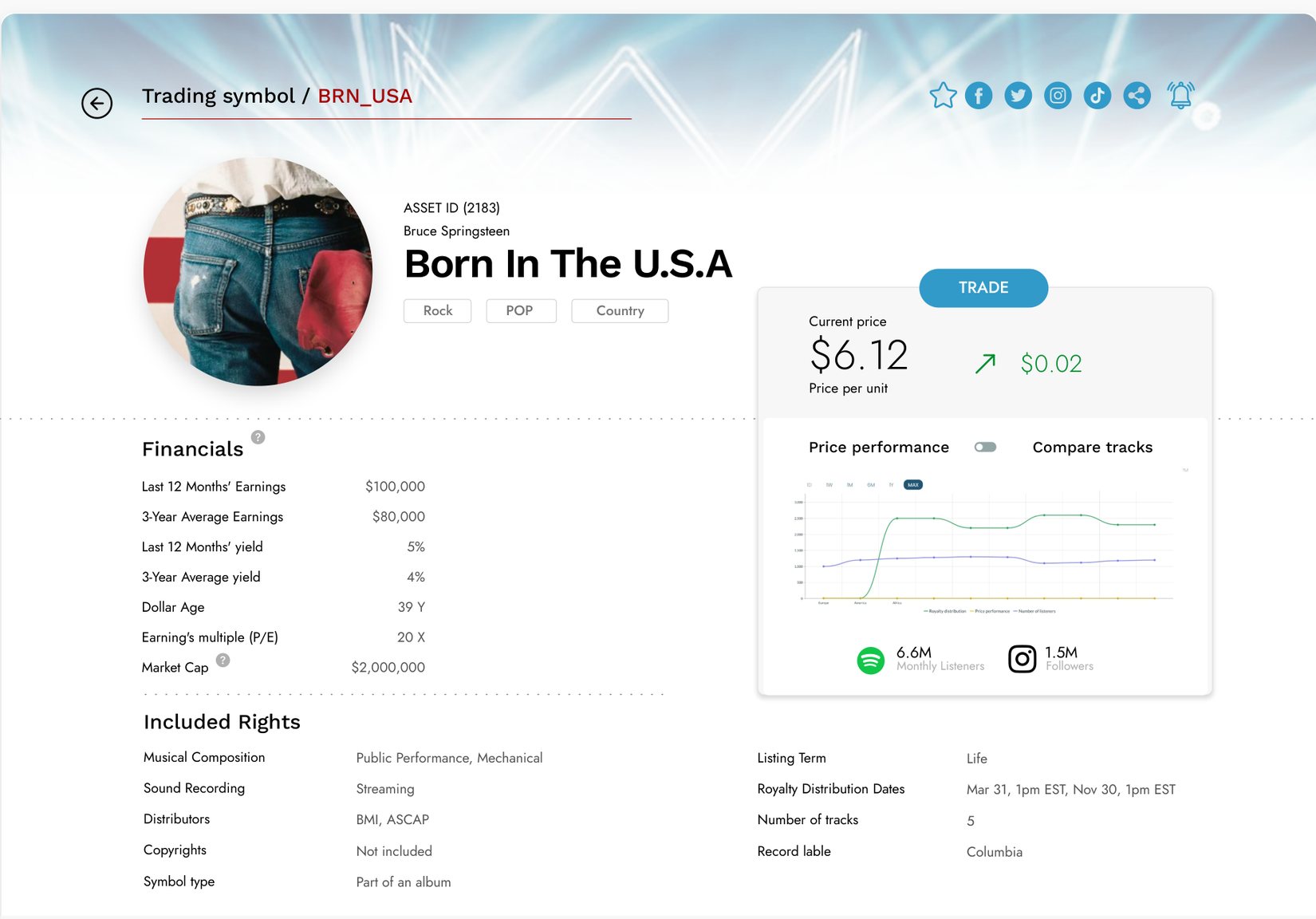
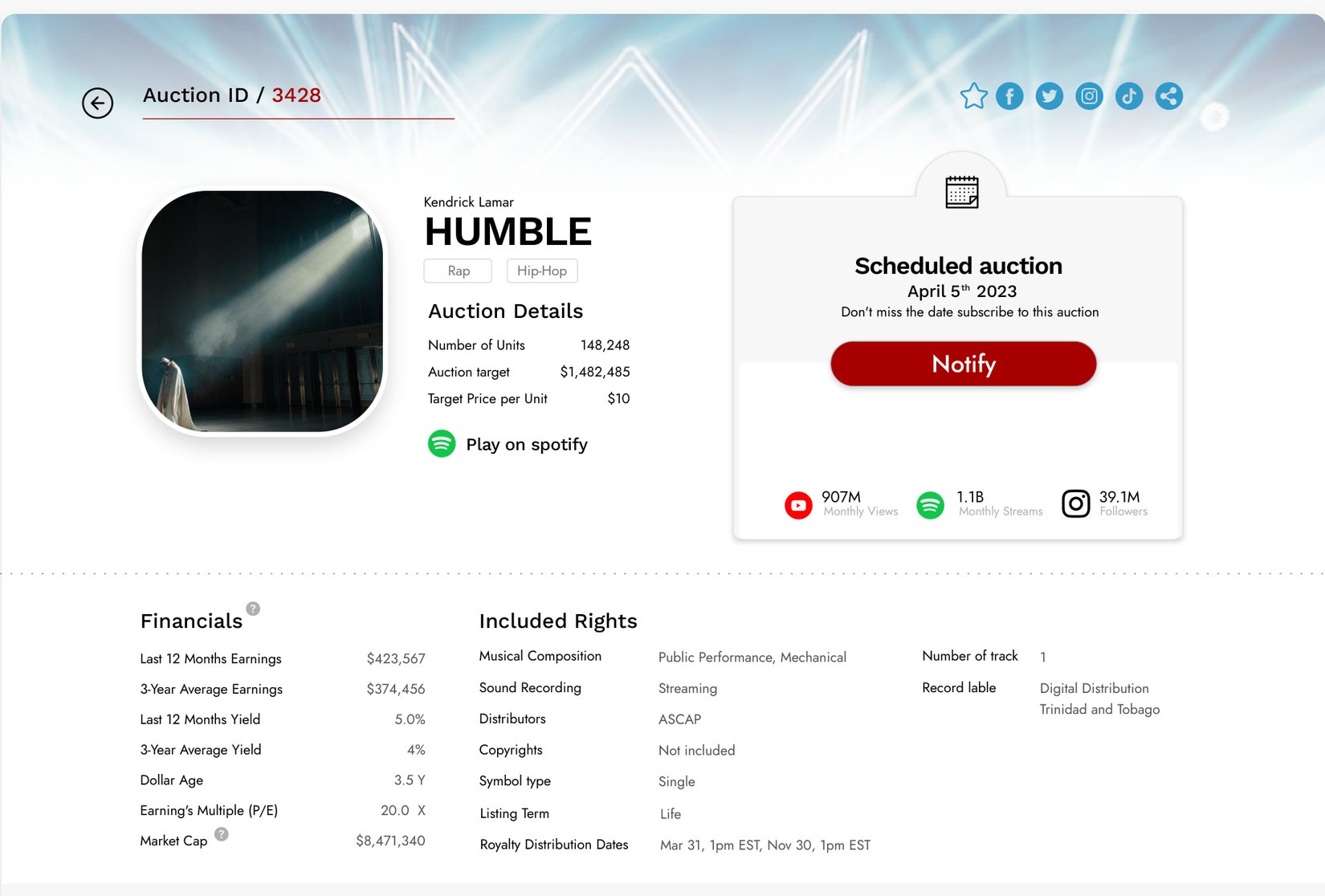
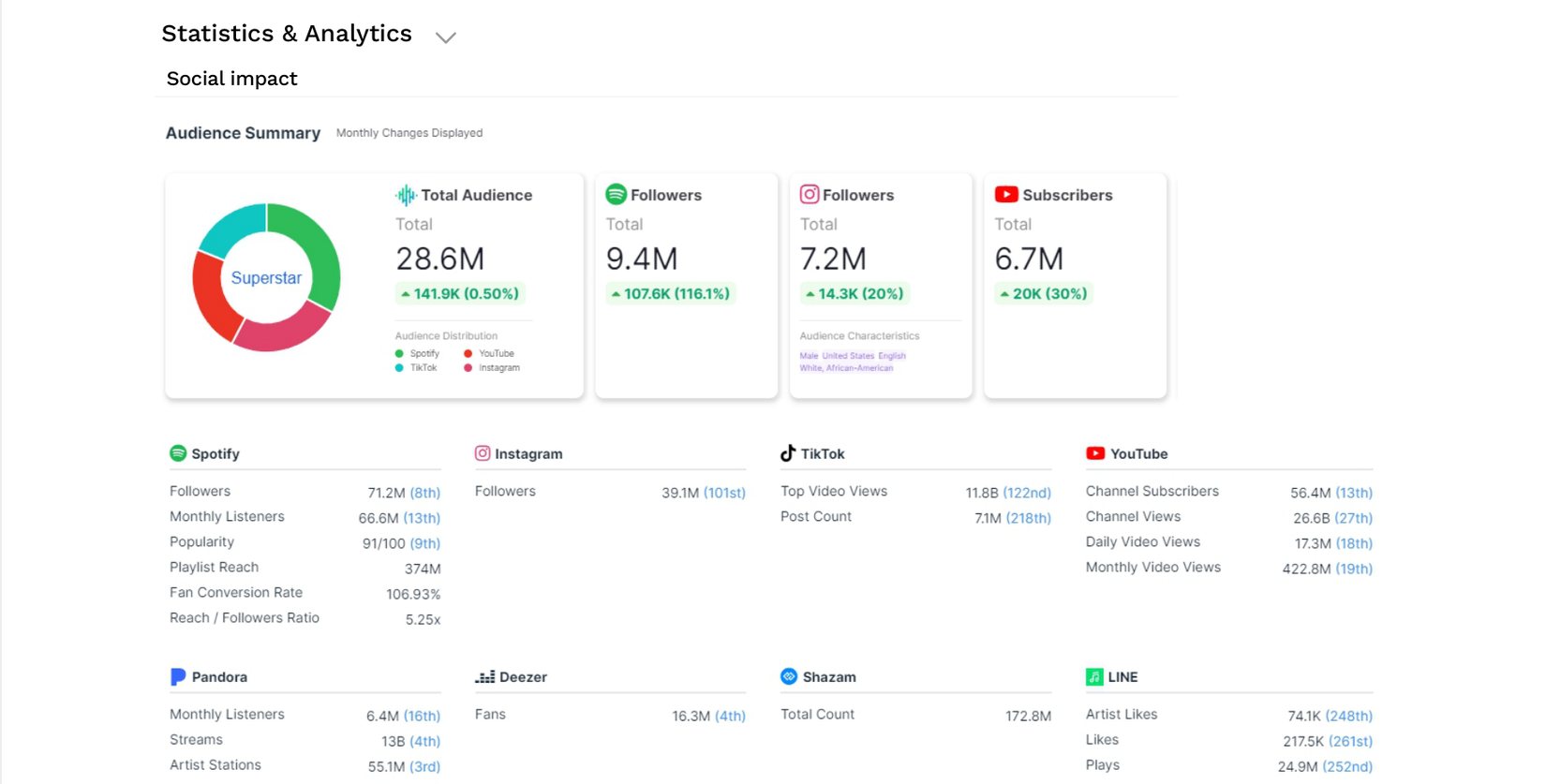
- Two worlds on one page. Investment numbers (earnings, yield, earnings multiple, market cap) had to sit next to music numbers (streams, listeners, social reach, press) without overwhelming either audience.
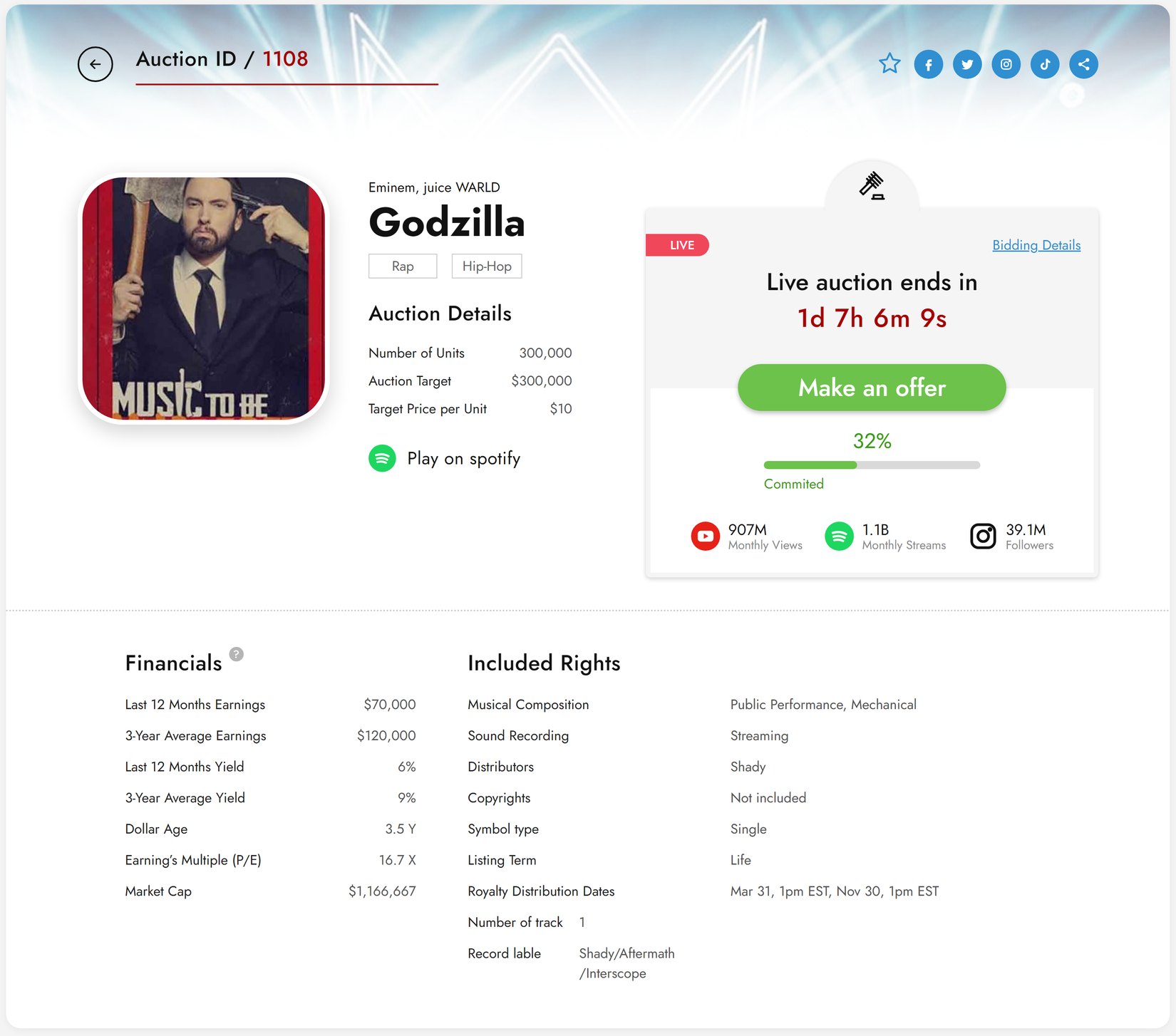
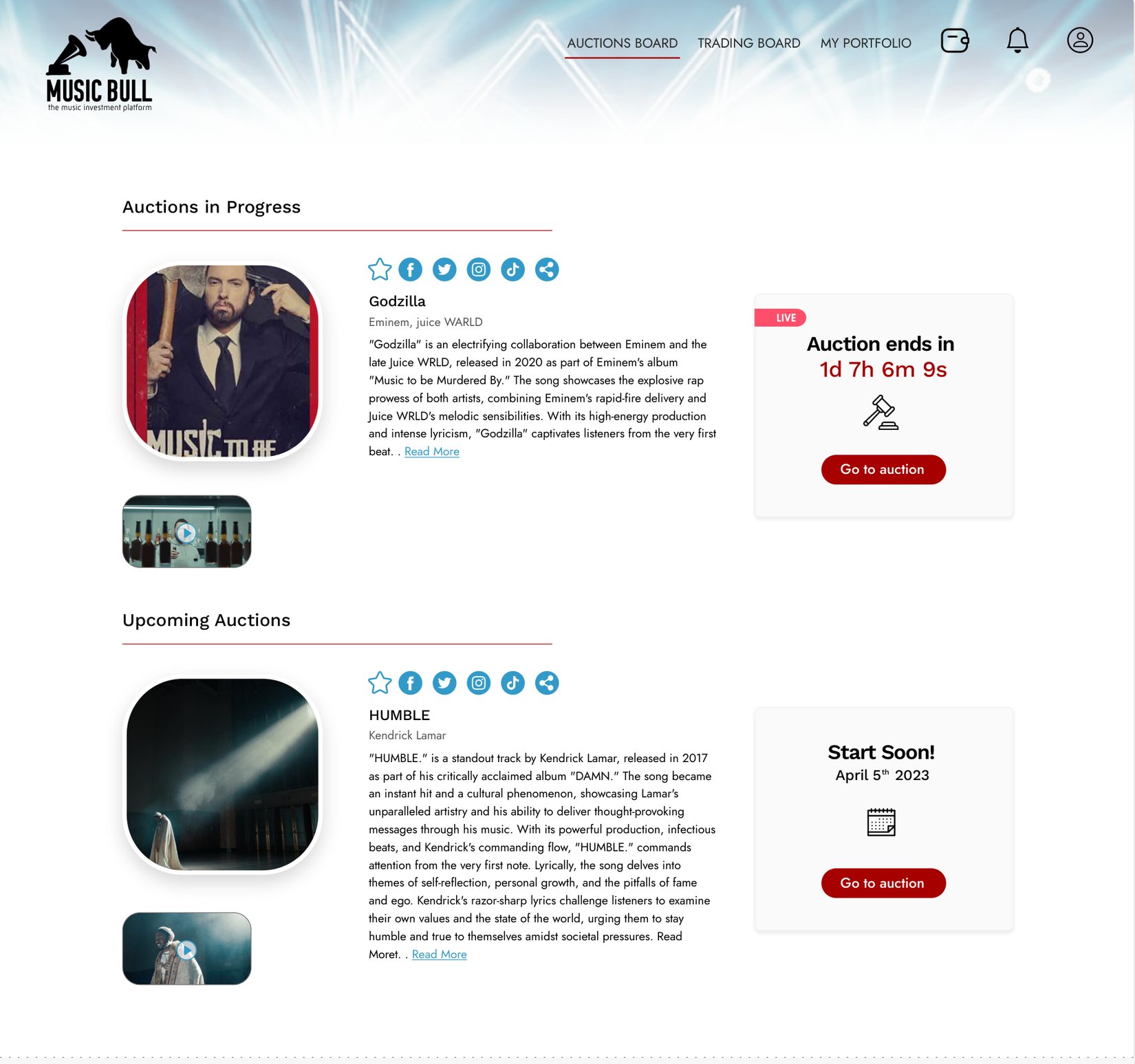
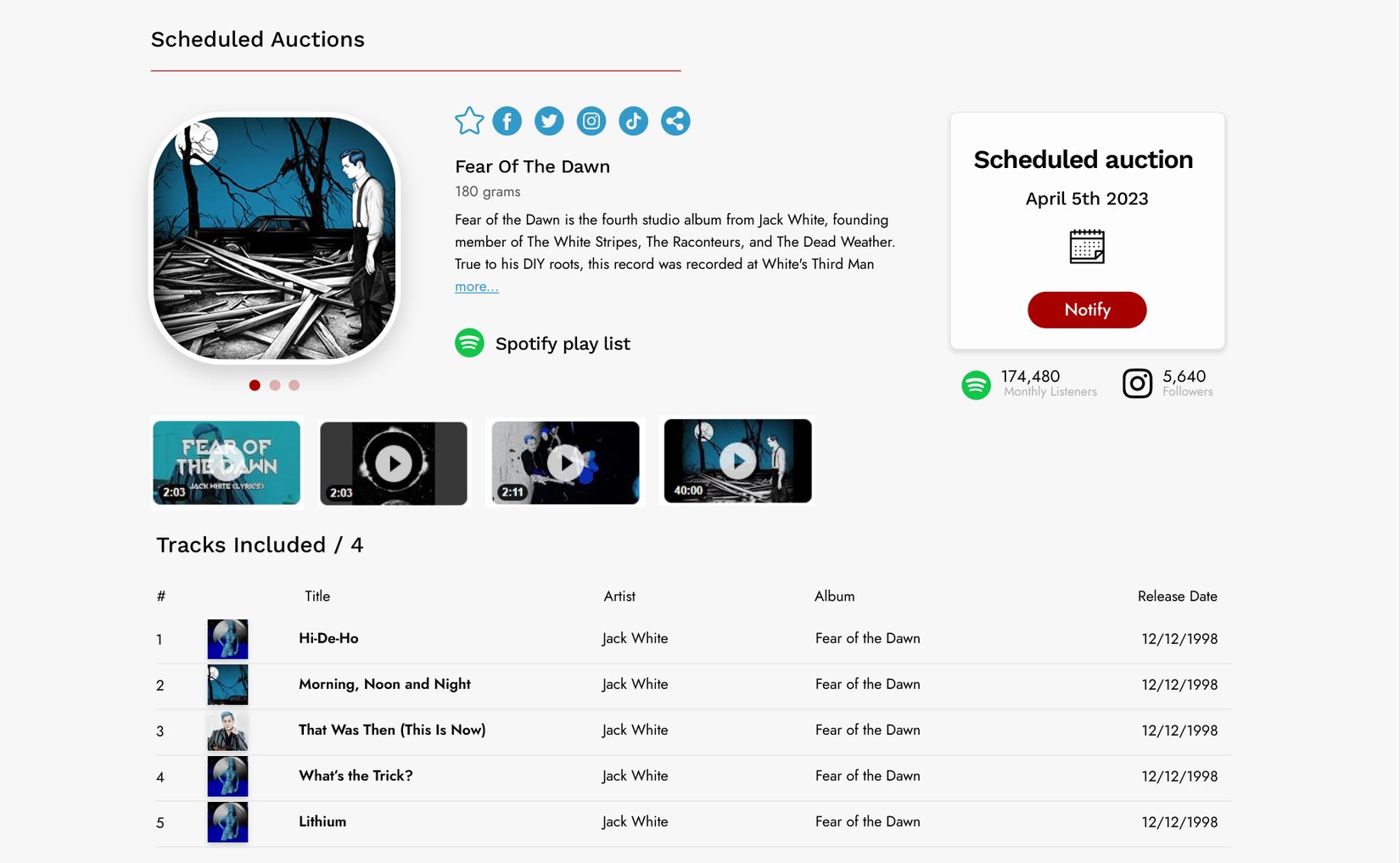
- An auction lifecycle. Every auction moves from scheduled to upcoming to live, and each state needs its own call to action: Notify, Go to auction or Make an offer.
- Two roles. Traders bid and trade. Rightsholders need an admin area to list songs, declare the rights and percentages they sell, run the IPO and get paid.
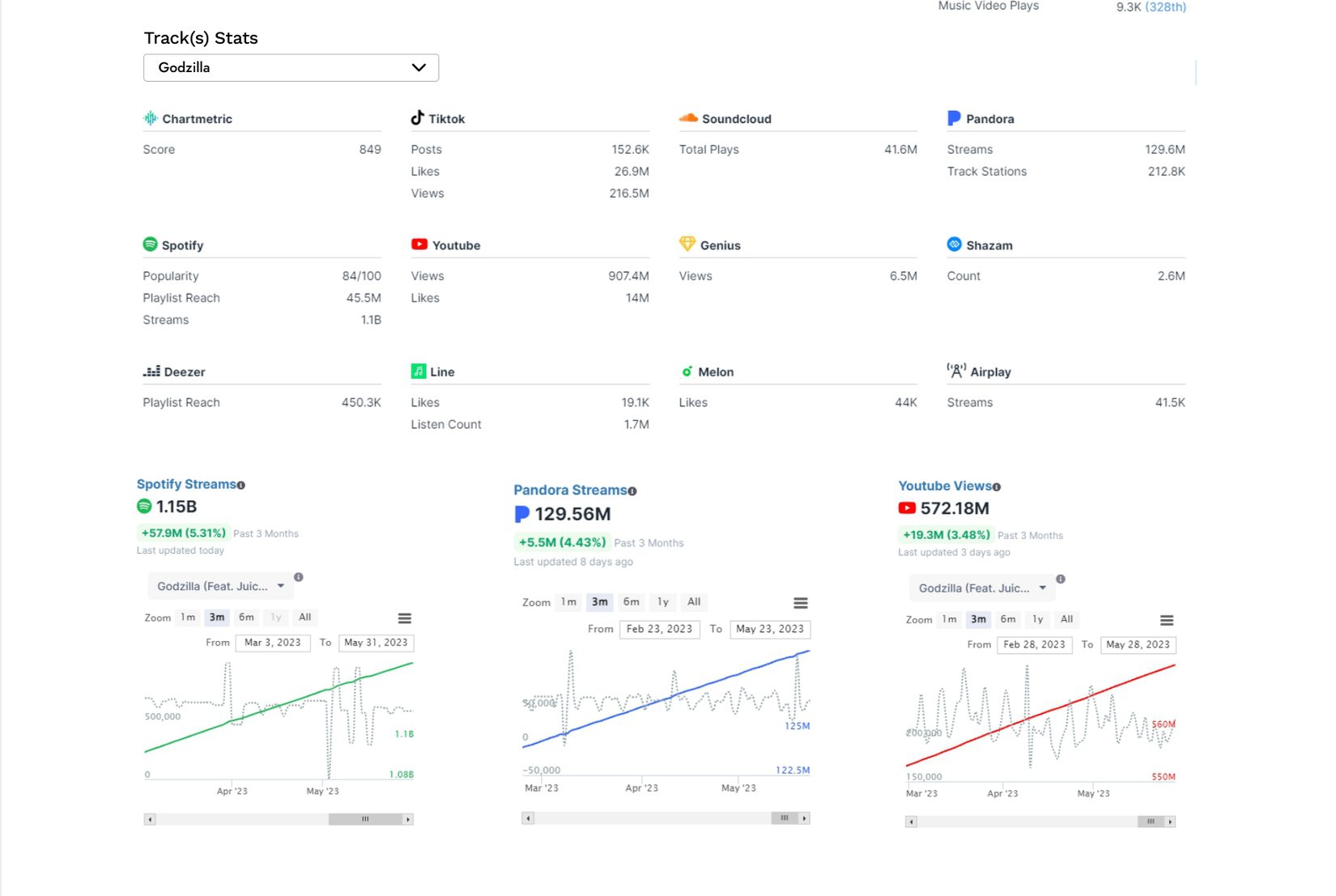
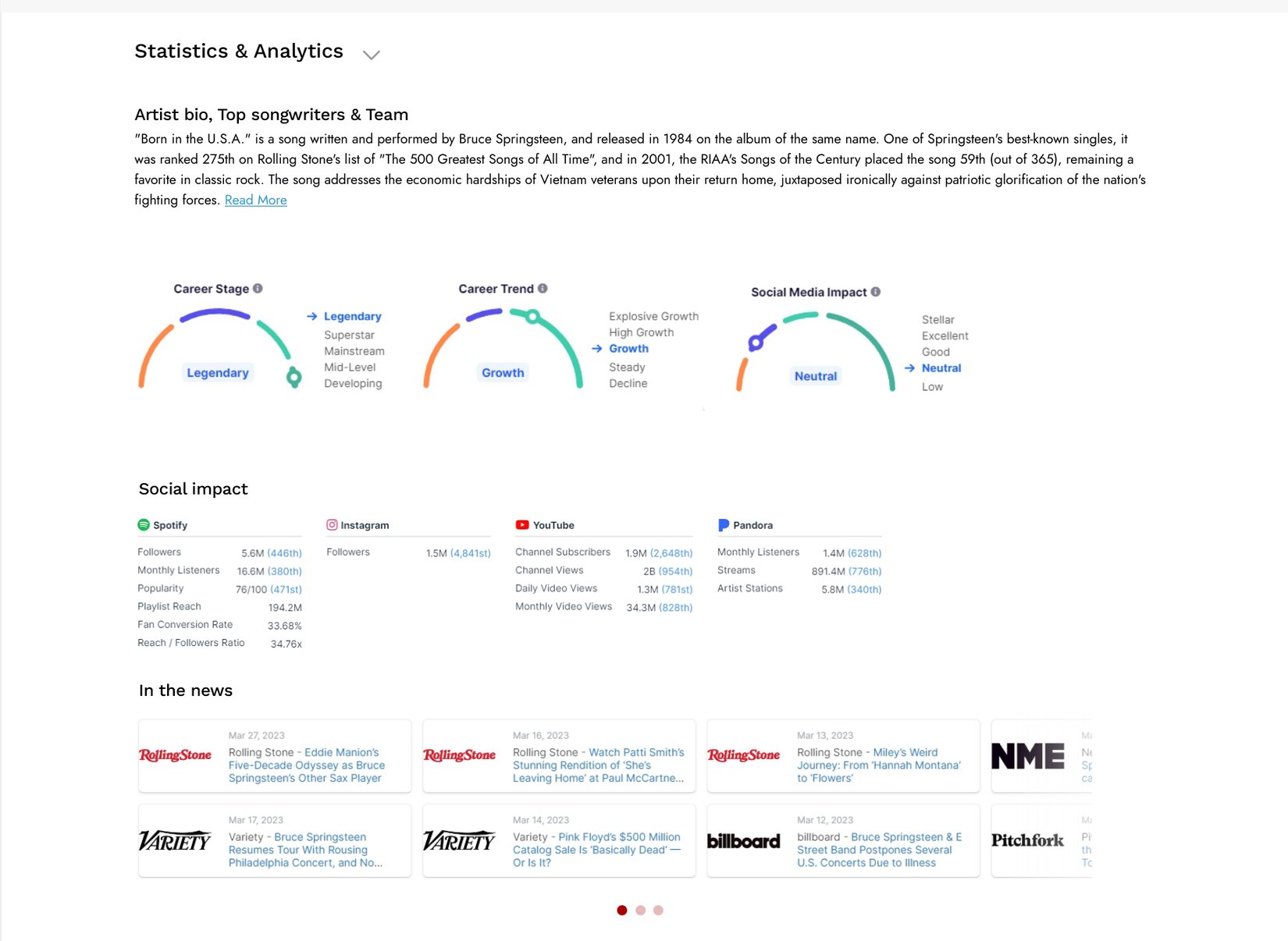
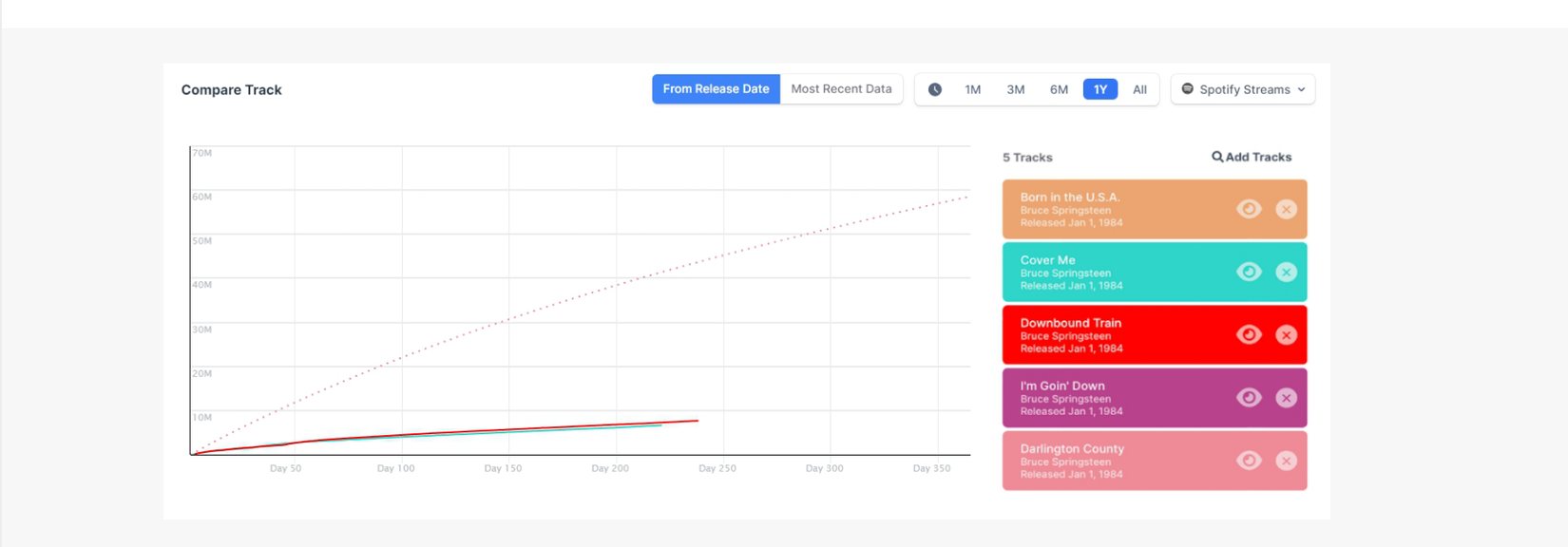
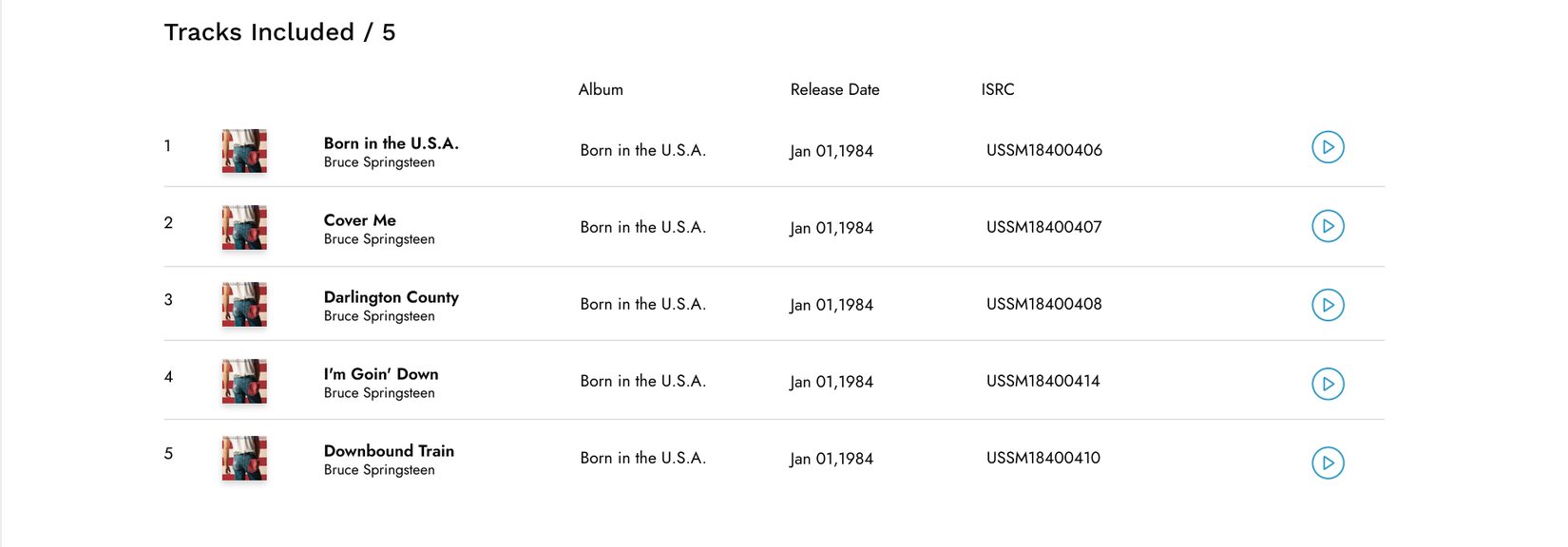
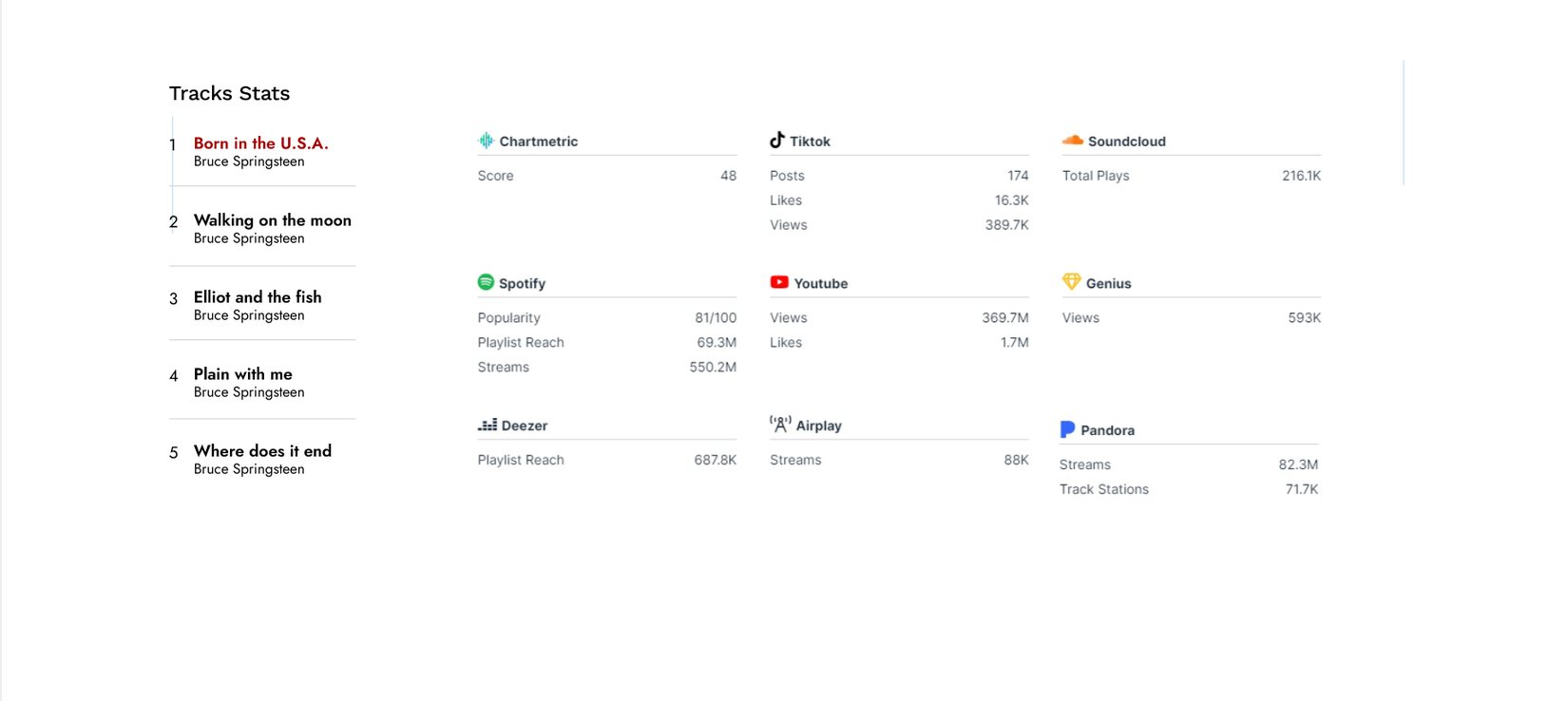
- Data from many platforms. Spotify, YouTube, TikTok, Instagram, Pandora, Shazam, Deezer and others each report different measures, all shown for every song.
My methodology
I checked each stage with stakeholders before moving to the next.
- Discover. Analyzed the domain: how traders and rightsholders work, what they need to decide, and their pain points.
- Model. Mapped the auction, trading and onboarding workflows for each role, and reviewed them with stakeholders.
- Validate. Built clickable prototypes, tested them with real traders and artists, and reviewed them with my co-founders.
- Design. Designed the final UI for web, iOS and Android on the tested flows.
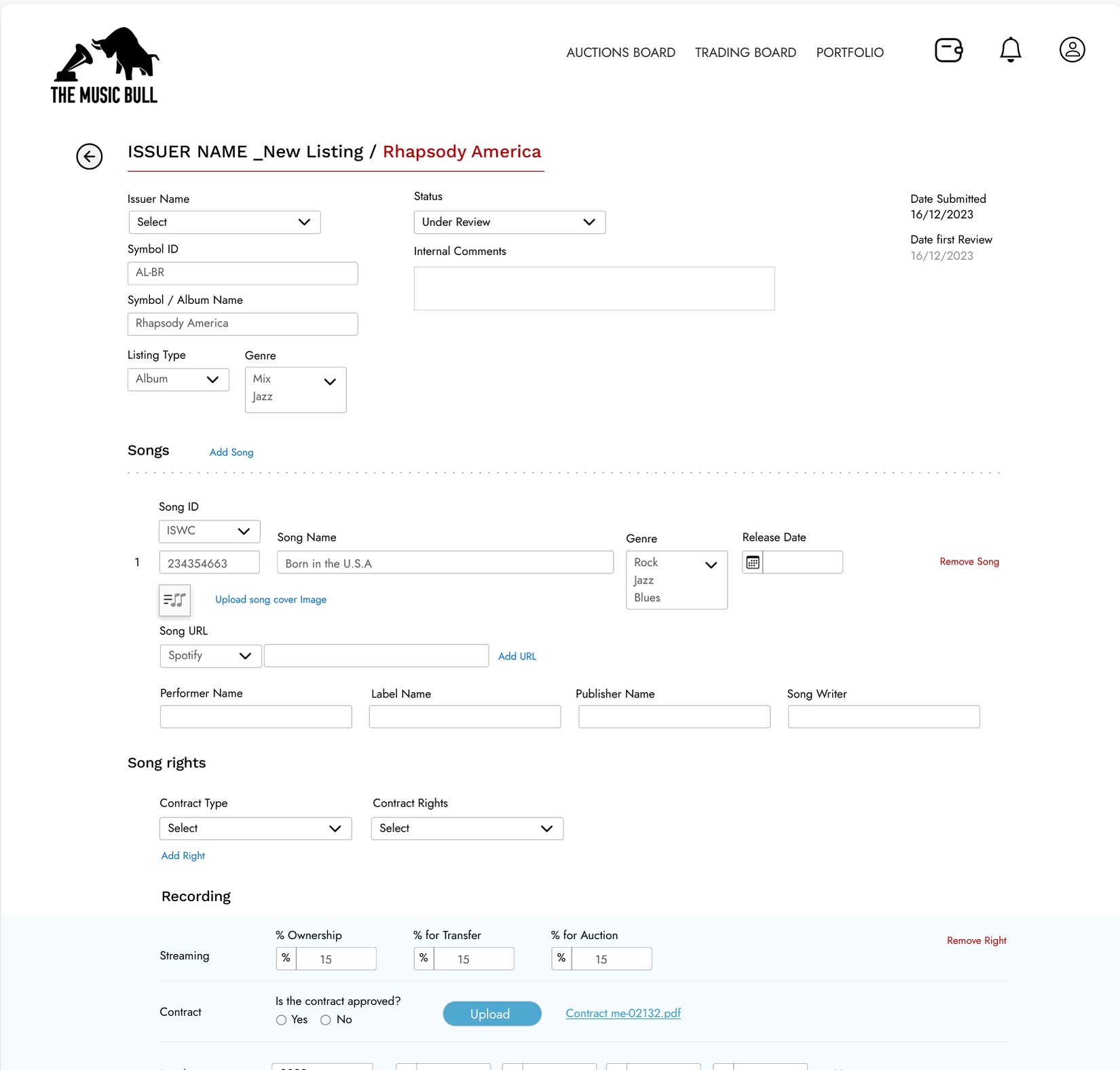
The rightsholder’s side: creating an IPO
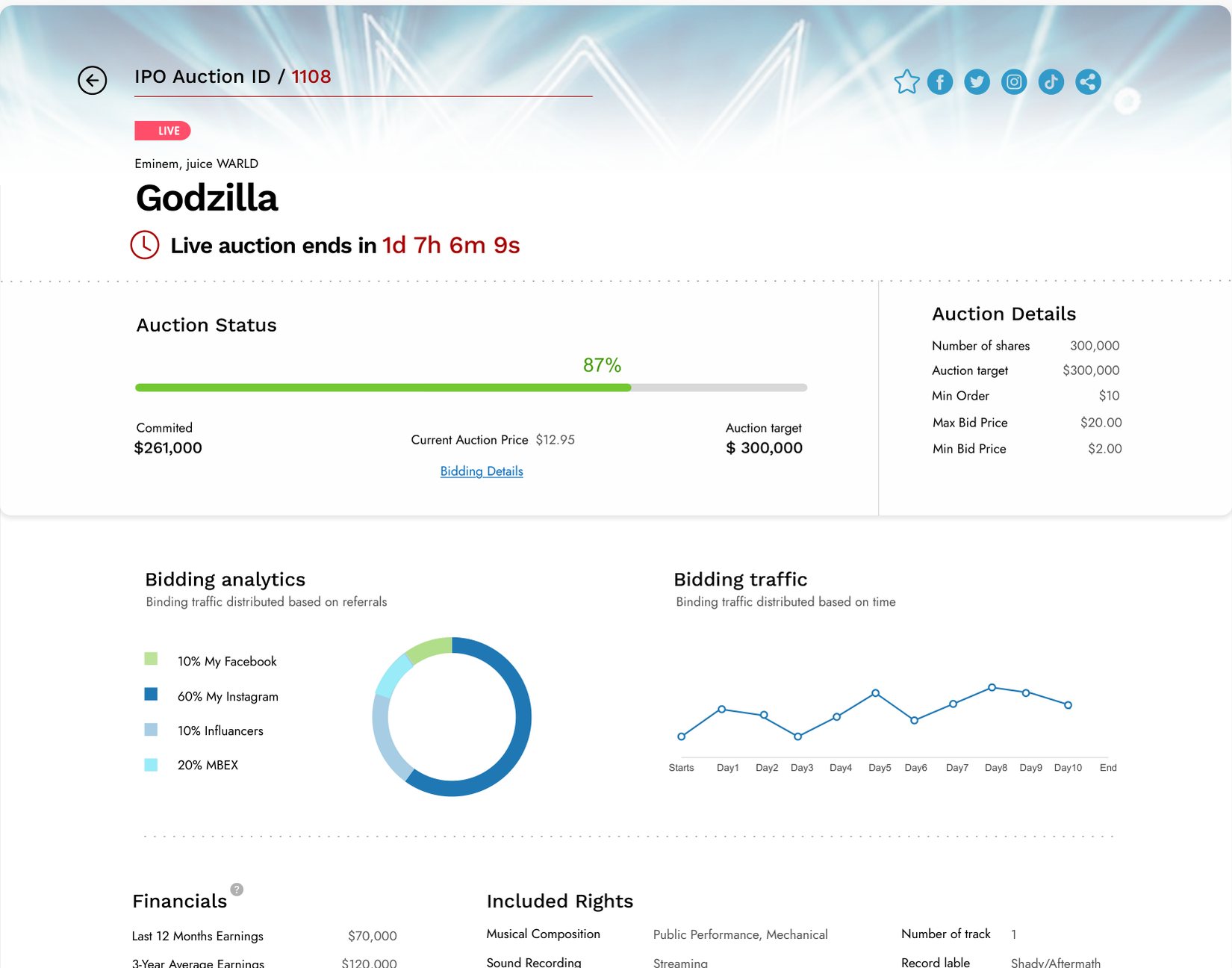
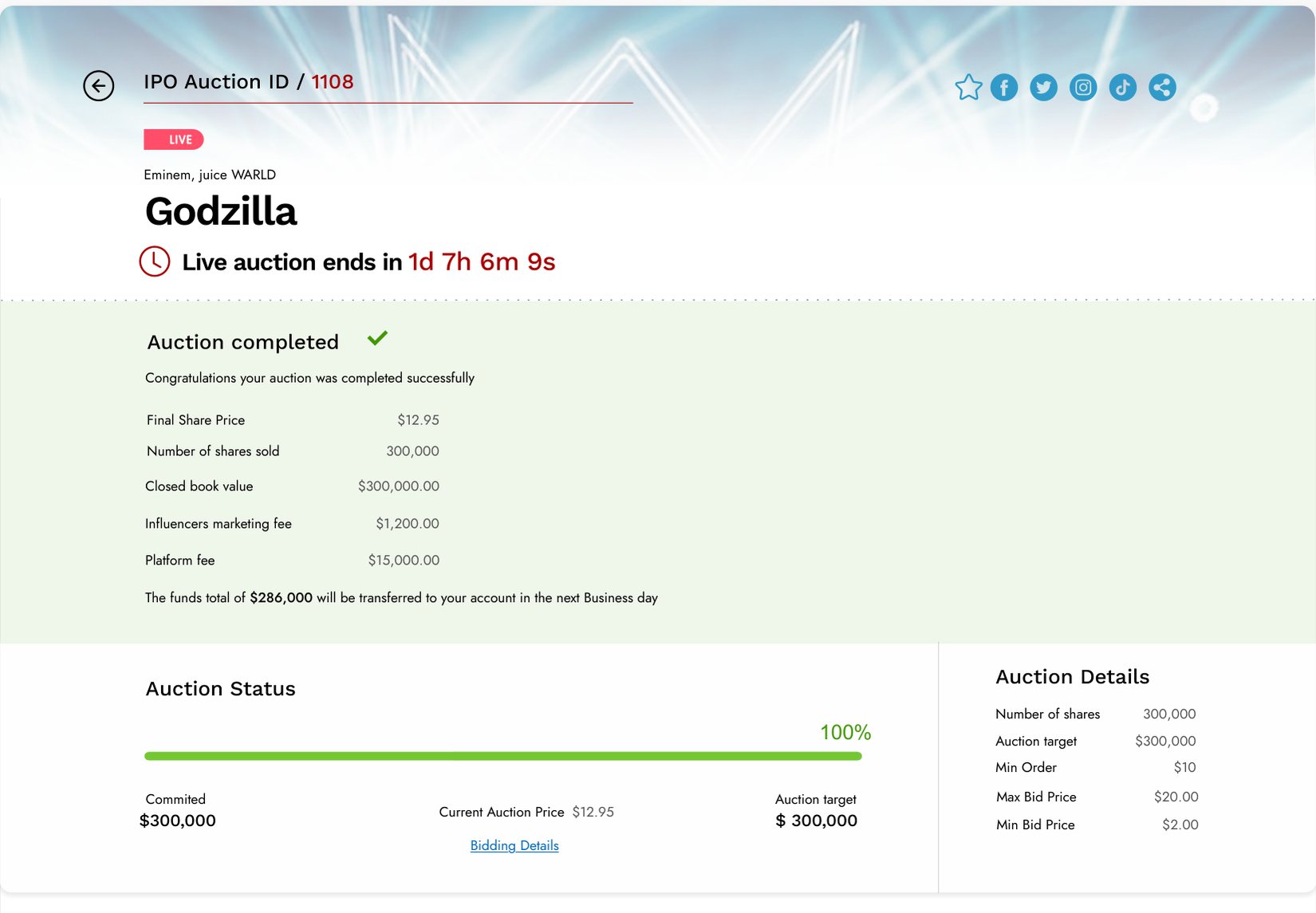
Rightsholders get their own admin area. They create a listing with its songs and rights, set what share of each right goes to auction, and follow the IPO live: money committed, bids by source, and the payout when it closes.
Auctions
One board shows every auction by state. Each auction page keeps the same structure: what is on offer, the deal terms, and the data behind the song.
Trading
After the auction, the song trades under its symbol. The analytics explain the price: career stage, trend, social impact and press.
Sign-up and account, on mobile
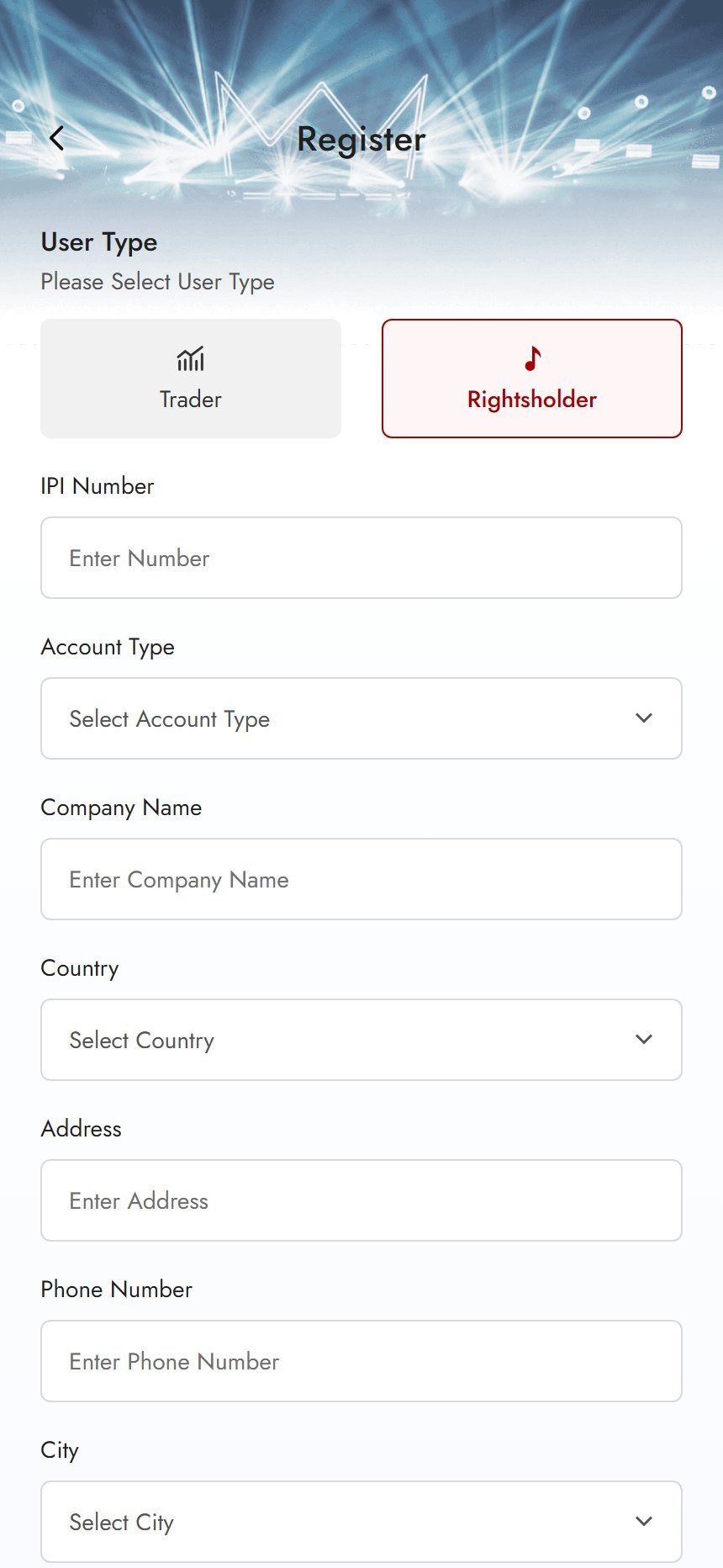
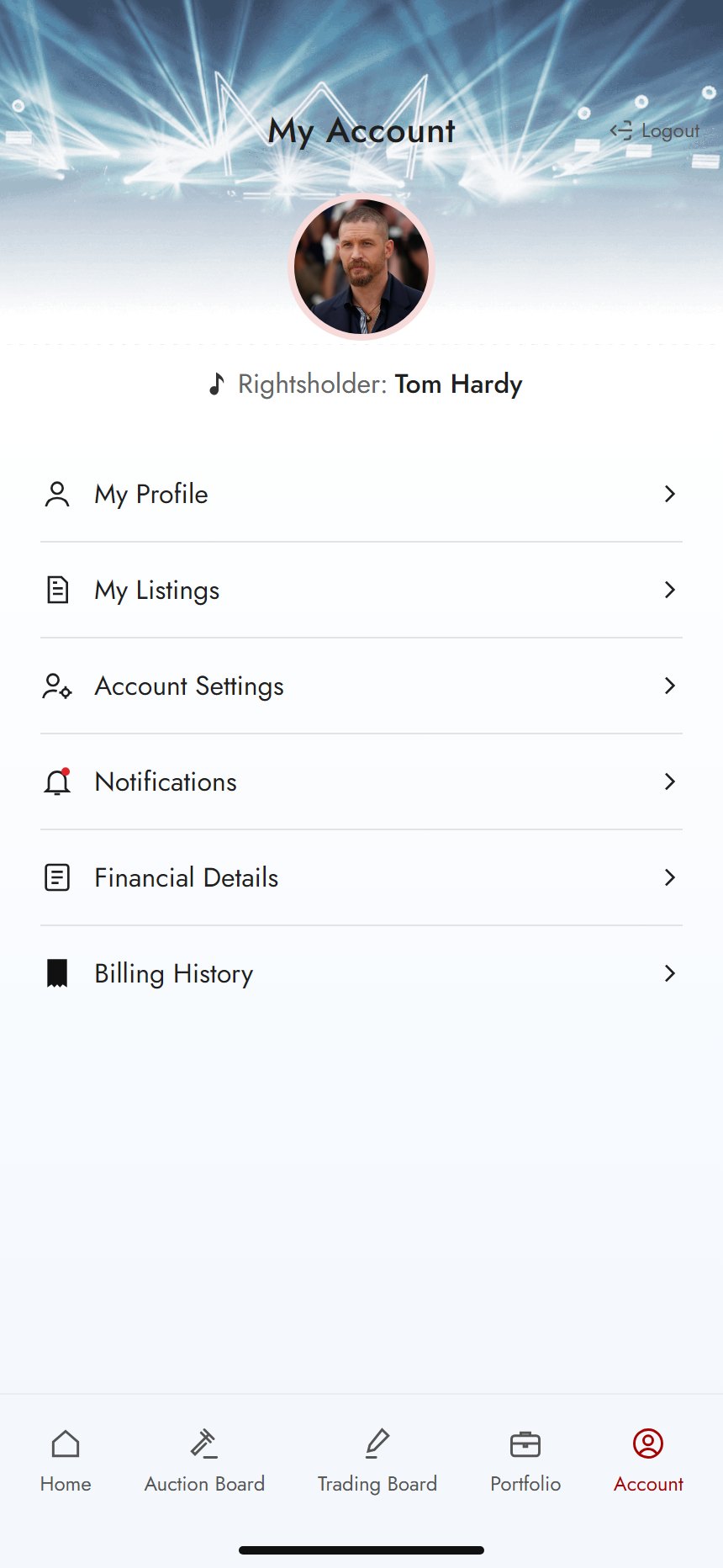
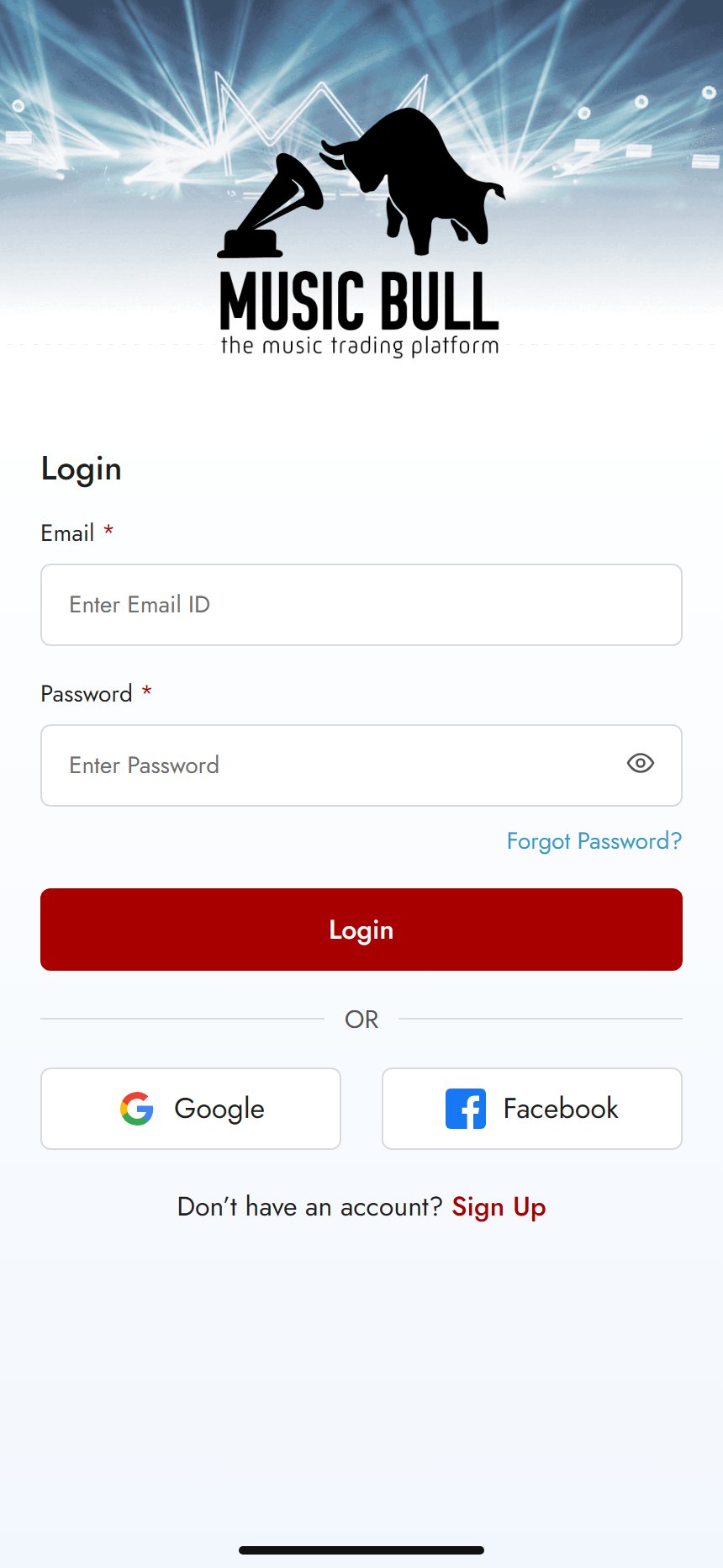
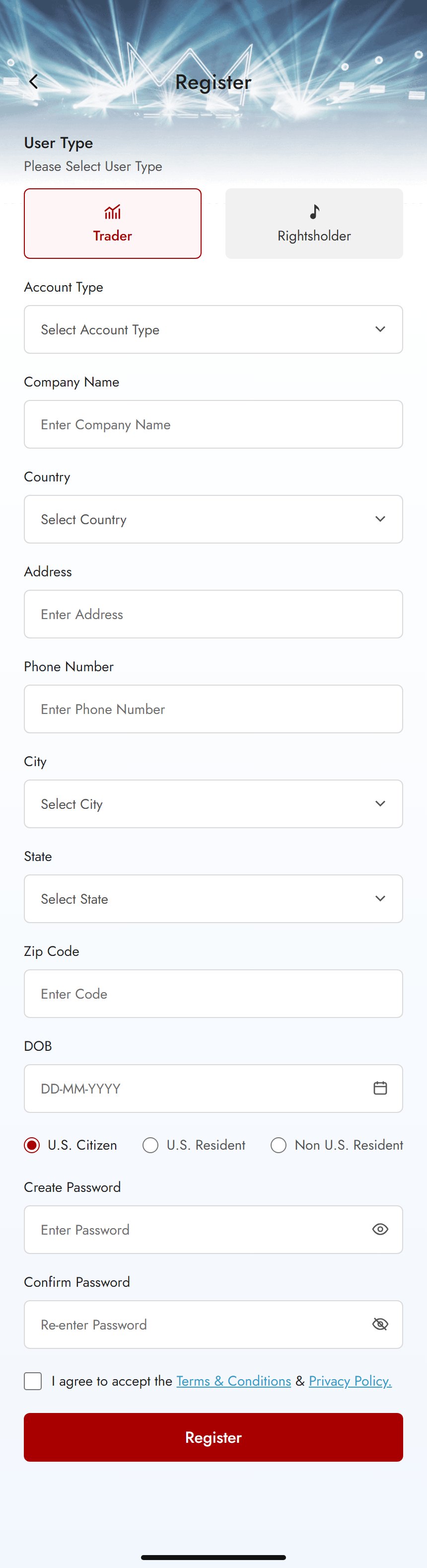
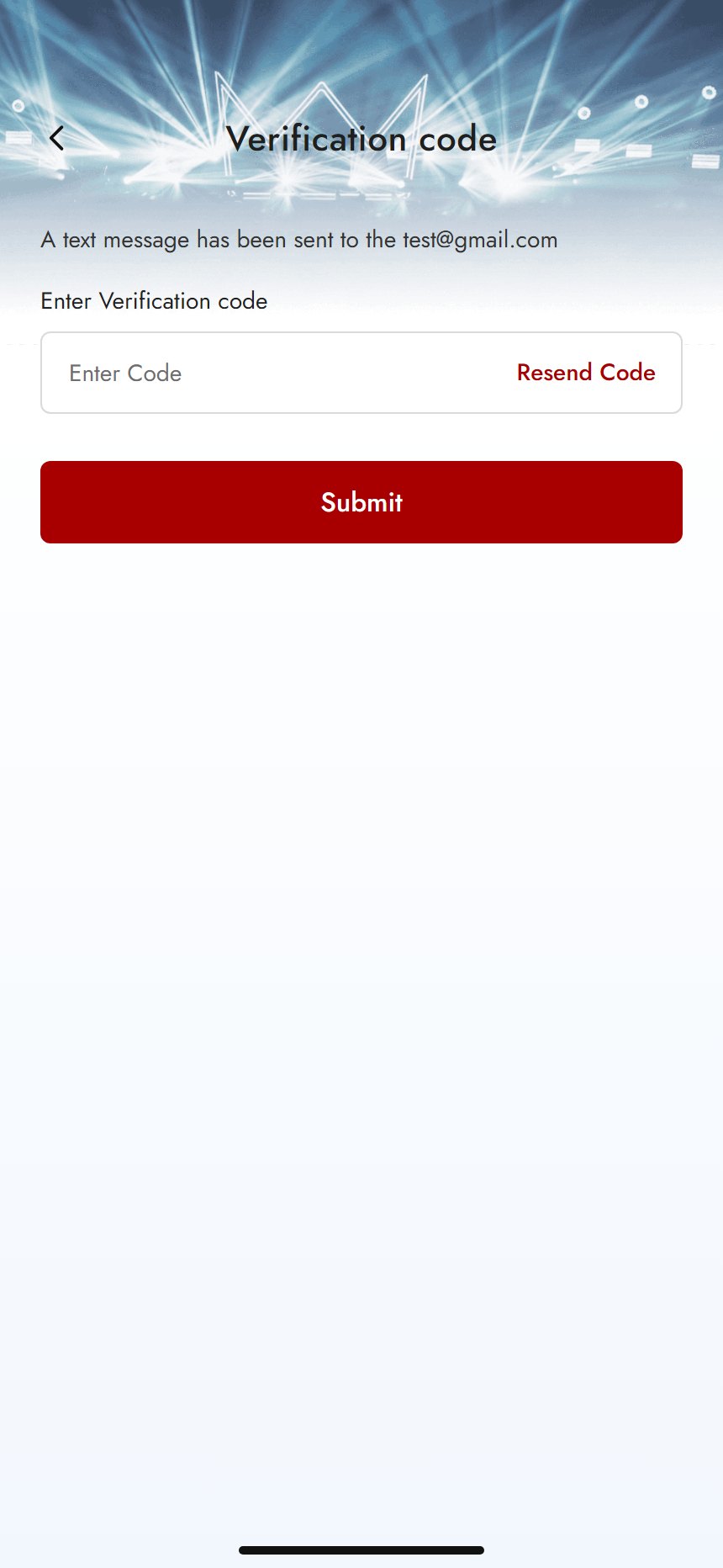
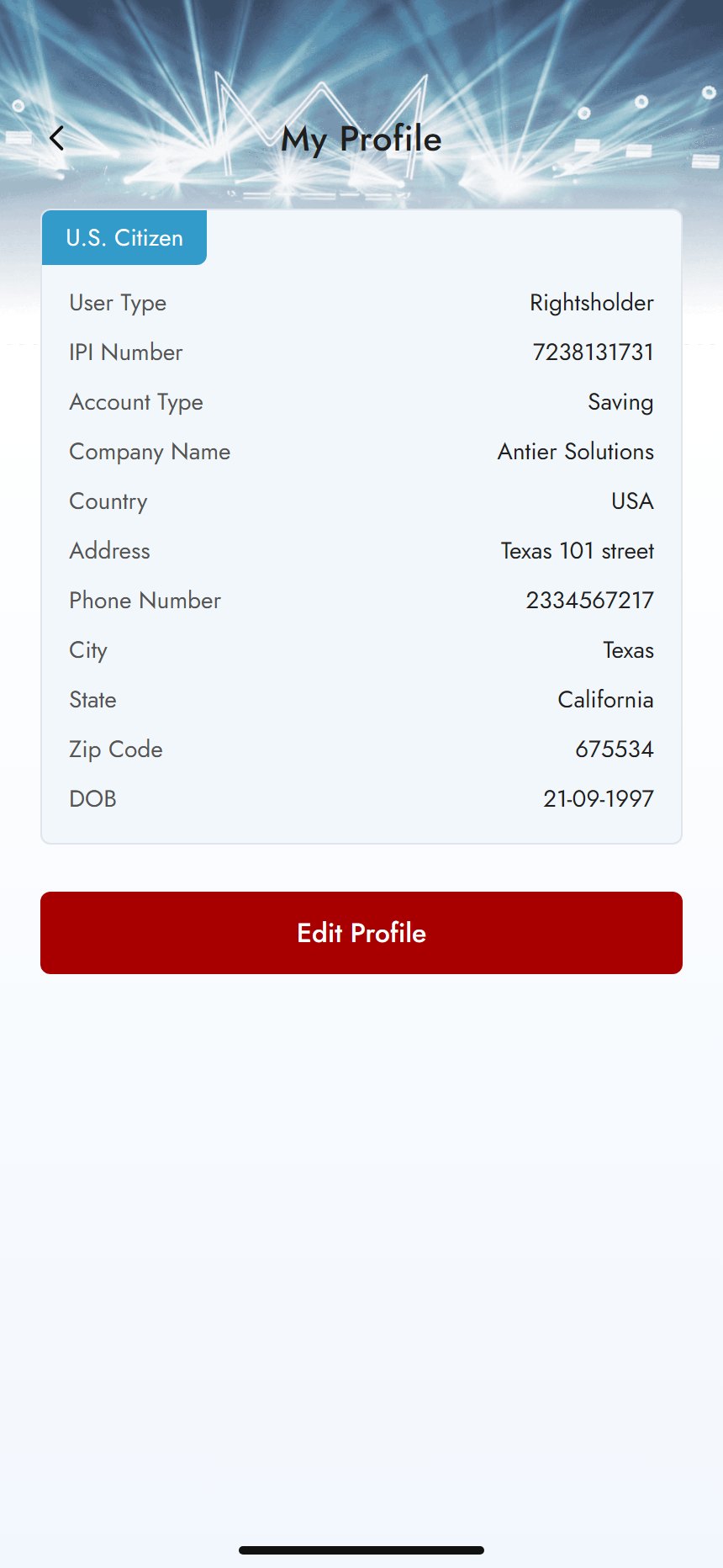
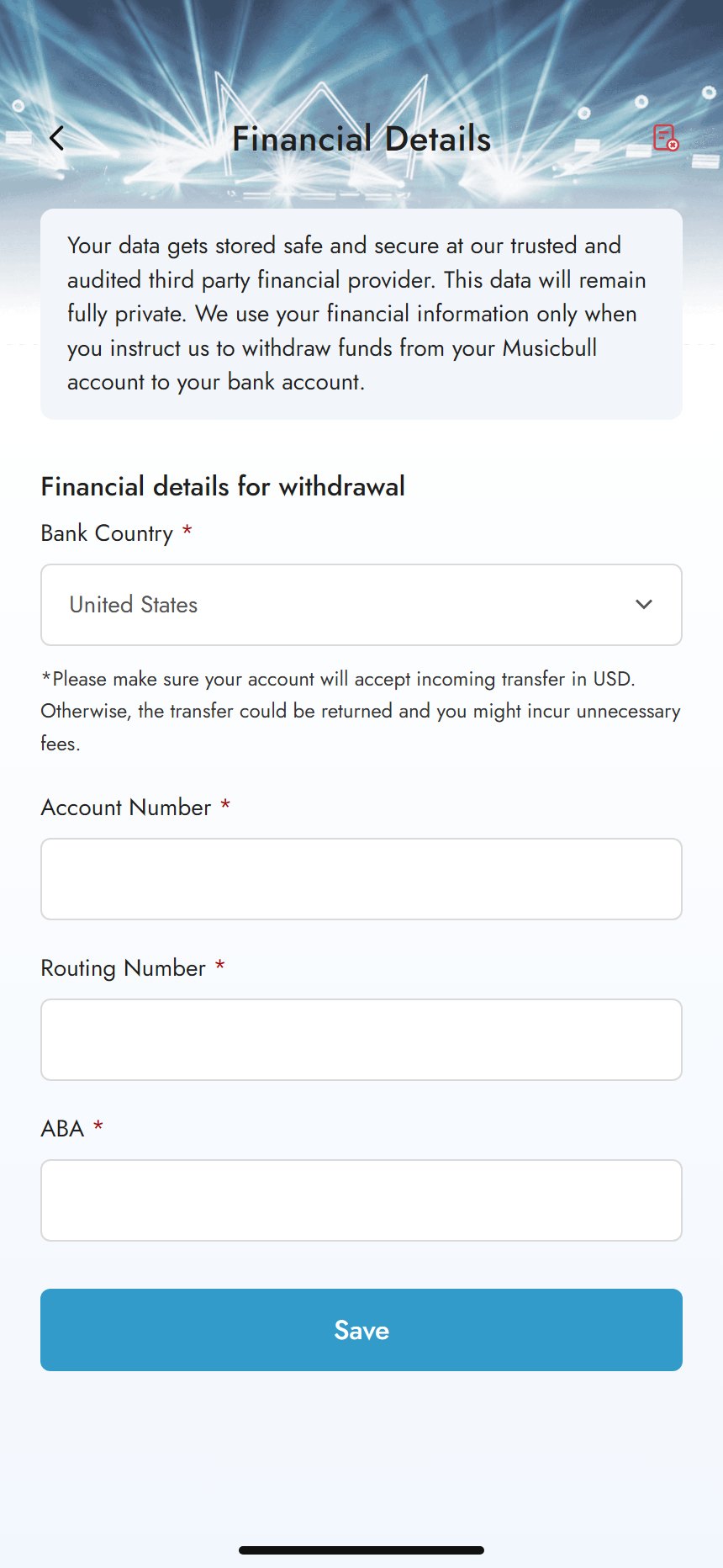
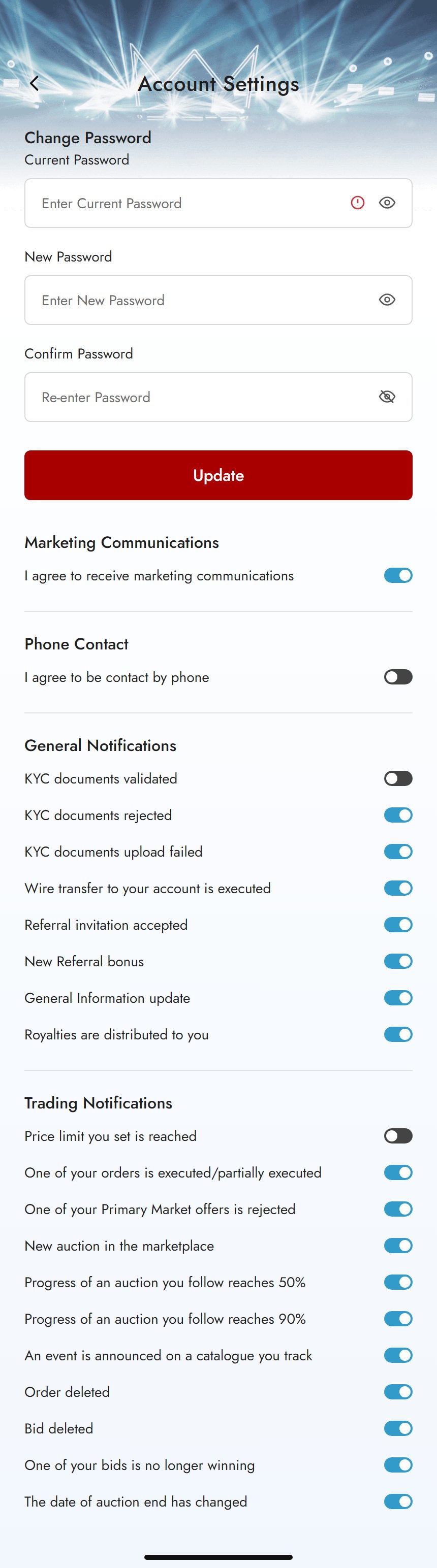
Users choose Trader or Rightsholder when they register. The account area holds their profile, listings, settings, notifications, payout details and billing history.
What got easier
Every song has the same page structure, in auctions and in trading. The auction state is always clear, with a countdown and progress toward the target, and music performance reads as investment data. Traders and rightsholders each have their own path from sign-up to payout, a rightsholder can set up and follow an IPO on their own, and every platform’s numbers for a song sit in one place.